For three days. my favorite jeans took that long to dry during the last downpour. after soaking wet on the clothesline for three full days, they started to smell musty, which made you want to wash them again. by day four, I gave up and continued to wear them despite feeling anxious about whether or not people could smell the moisture.
You understand just what I mean if you’ve ever had to deal with a bunch of wet laundry after a severe rain. the pain of never having dry clothing when you need them. the concern that your treasured clothes may develop mold. the bad smell that remains after several washing.
However, this is what made all the difference for me. understanding that waiting for garments to dry naturally is not the goal of indoor drying. it’s about establishing the situation necessary to enable drying.
Even during the height of the monsoon, I was able to dry an entire load of clothes indoors in less than a day once I found a few important tips and modified my strategy. no wet areas, strange smells, or three-day wait times.
Why clothes take forever to dry indoors
The lack of sunlight is not the only issue with drying clothing indoors during the rainy season. understanding the many elements that are working against you can help you determine what has to be fixed.
The main cause of clothing not drying is the monsoon season, when humidity is at its maximum. there is nowhere for the water in your garments to go when the air surrounding them is already wet with moisture.
When the air is unable to absorb any more water, evaporation essentially ends. your clothes just remain wet for all time.
The natural air circulation that outside drying offers is missing from inside areas. outside, the wind continually shifts the air, bringing in drier air to replace the humid air surrounding wet clothing. unless you take action, the air inside your home is mostly static. your wet clothes are kept from drying by the pocket of wet air that surrounds them.
The biggest mistakes everyone makes
Let’s discuss what doesn’t work before moving on to what does. I made these errors for years before realizing they were leading to the situation.
Although it can look efficient to overload your washing machine, doing so backfires during the monsoon. the clothing become even more damper when the machine is filled to the top because they are not properly spin.
Your clothing take a lot longer to dry because they contain a lot more water when they come out of the washing machine. you should wash lighter loads during the rainy season to enable the spin cycle to efficiently collect water.
Another typical error is hanging clothes right away after washing without draining extra water. clothes keep water that can be manually removed even after the spin cycle. doing a second spin cycle or manually wringing out clothing makes a huge impact. your interior air won’t have to absorb that extra water if you remove it immediately.
Moisture is trapped when damp clothing have given too close to one another with no air flow. to make room on my drying rack, I used to pack as many clothes as I could. this is completely incorrect. for air to flow through clothing, there must be room between them. the places where they overlap are never properly dried whether they are grouped together or in touch.
The spin cycle trick that changes everything
Without a doubt, this is the best thing you can do before attempting to dry things indoors. the majority of the extra water is eliminated by your washing machine’s spin cycle, and a second spin further lowers the moisture content for quicker indoor drying.
This is something that most people are unaware of. one spin and two spins have very different water contents. your garments can keep 40–50% of the water they absorbed while washing even after one spin. that decreases to around 20–30% after a second spin. the difference between drying clothing in 12 hours and 3 days is 20%.
You can use the fastest spin speed that is safe for your materials if your washing machine has multiple spin speed options. more water is taken out at higher spin speeds. for this reason, some machines include an additional spin option. If not, simply manually repeat the spin cycle once the wash is finished.
It’s important to carefully dry out items that you wash by hand. don’t just twist them gently. squeeze out as much water as you can by really drying them from top to bottom. It’s worth it, but your hands will grow tired. You won’t have to let the water evaporate later if you extract it now.
How to setting up drying space?
The location and layout of your indoor drying space play a major role for deciding whether your clothes get dry or remain wet for several days.
A air-conditioned, low-humidity room with windows, fans, or a dehumidifier is excellent. Keep away of tiny, dark rooms such as restrooms, since lack of ventilation may prevent drying and result in foul smells.
Closed places are not as effective as a living room with a ceiling fan, a bedroom with windows you can open at times or even a covered balcony area.
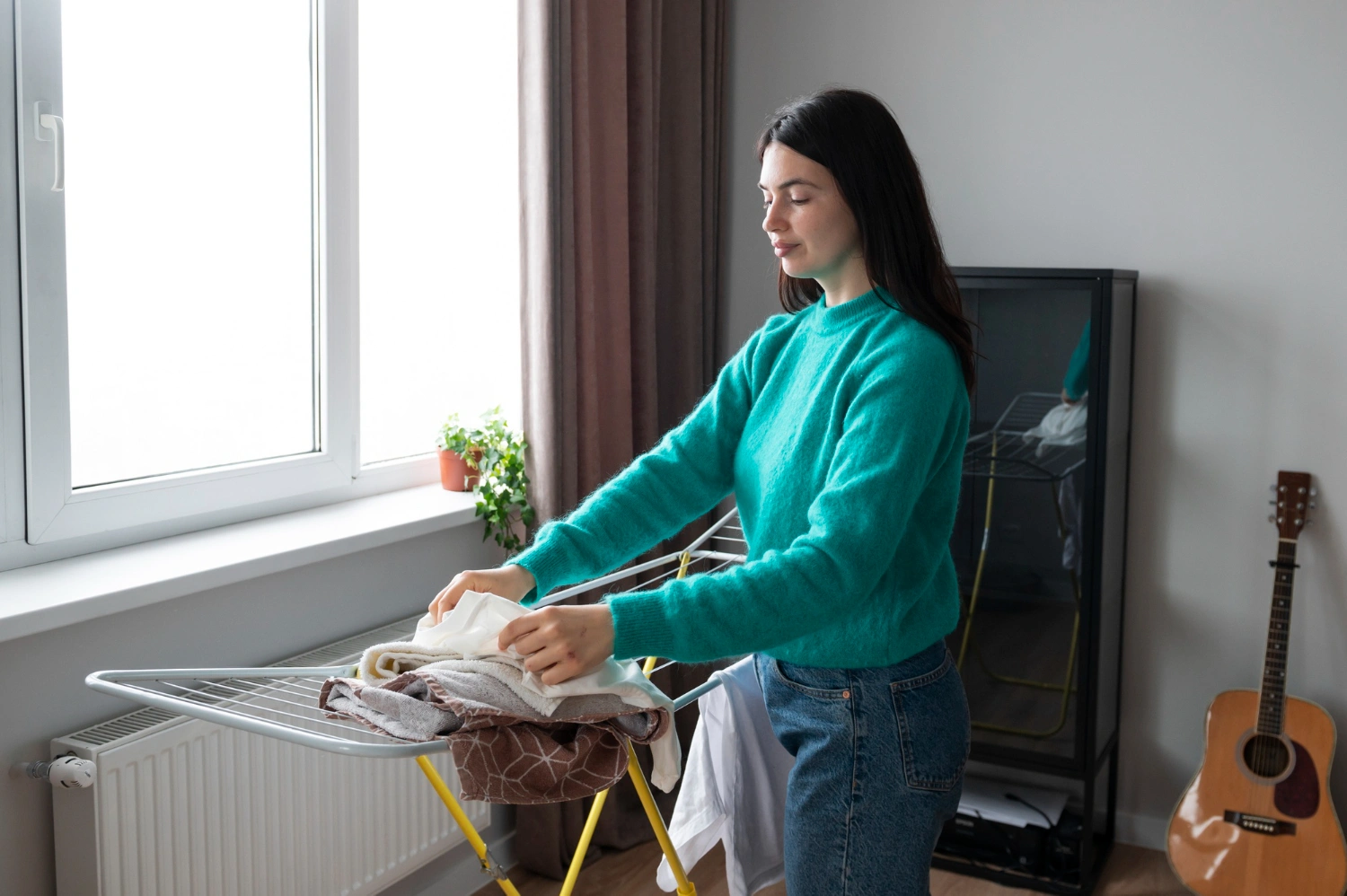
A heater should be placed in a room with good ventilation. clothes may be displayed on a rack or clothes horse one to two meters from the heater so that warm air can flow around the clothing. Since you’re not trying to directly heat your clothes, the distance is important.
Warm, flowing air that can absorb moisture is what you’re producing. The proper distance with enough circulation is more effective than being too near to the heater.
How to arrange clothes for faster drying?
You might be surprised to learn how much drying time can be affected by how you hang your clothing on your drying rack. hours of drying time are the difference between the proper and incorrect methods.
Give clothing plenty of space. clothes dry more quickly when there is less clothing on the stand or laundry and more room for air to circulate. instead of packing everything onto one rack when you have a full load, use several racks or hang items in separate parts of your house. clothes that are crowded don’t dry.
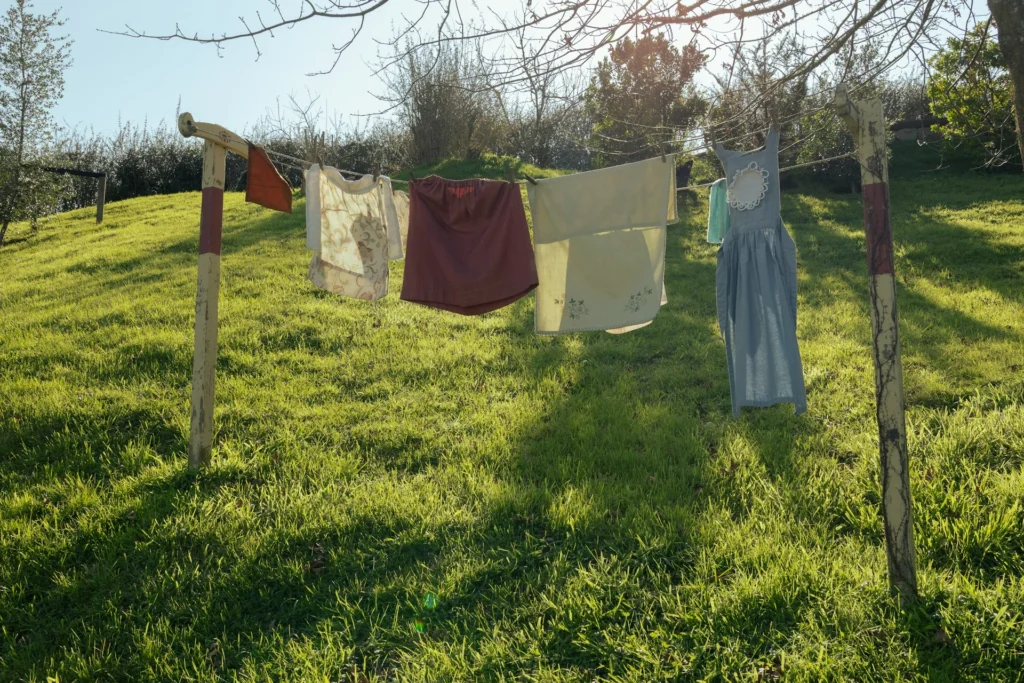
Items should be placed by the heaviest section. Instead of hanging from the legs, jeans should hang from the waistline. shirts from the hem rather than the shoulders. gravity helps water drop down and off, allowing the thickest, wettest areas to receive the most air contact. It takes a very long time for the heavy, damp waistline to dry when the jeans are hung from the legs.
You should change the way you dress every couple hours. you should try rotating the items on the stand or clothesline every few hours since the side of the clothing that is given the air dries more quickly than the side that is not. turn objects around, rearrange them, and flip them inside out. Instead of one side being wet, this guarantees that every component receives equal air exposure.
Want to know how to fix sticky floors during monsoon then you should read here
Keep heavy and light objects separate. you should avoid placing thin t-shirts and heavy towels on the same rack. Light goods may dry well in less optimal locations, while heavy items require more aggressive drying conditions (near to fans, better air flow). Provide prime drying space to heavier things and group comparable items together.
How long does it take to dry clothes indoors during monsoon?
Depending on the season, drying a garment typically takes 3 to 4 hours during the day. however, depending on the kind of fabric and drying situations, clothing may take 12 to 36 hours to dry indoors during the monsoon with heavy humidity. thick pants or towels may take two to three days to dry, while light cotton t-shirts may dry overnight with a fan. even at the height of the monsoon, drying times may be lowered to less than 24 hours by using a dehumidifier, fan, and appropriate spacing.
Why do my clothes smell musty even after washing during rainy season?
If clothing dries too slowly or in an area with little airflow, it may smell musty. Bacteria and fungus that develop on wet cloth are the source of the odor. the main cause of the clothing not drying is the monsoon season, when air humidity is at its greatest. bacteria grow and provide that quality musty smell when clothing takes too long to dry. faster drying with sufficient air flow and airflow is necessary for prevention.
Should I run a second spin cycle before drying clothes?
Yes, without a doubt. the majority of the extra water is removed by your washing machine’s spin cycle. give your clothing another spin to speed up the drying process indoors. this increases the impact of air-drying and lowers moisture content, particularly in humid conditions. turning your clothes again is a good option if you have to dry them inside. This will extract more moisture from the clothing, helping indoor drying.