You feel it when you walk shoes across the floor of your living room. that uncomfortable, almost sticky feeling under your feet that makes you want to put on slippers right away. you recently cleaned your floor yesterday, but it still looks sticky. what’s happening?

There almost everyone experiences this during the rainy season, and it drives people insane. you use new products, clean more, and mop again, but the sticky feeling continues. the annoying thing is that your floors aren’t truly unclean. you may finally make a permanent change once you figure out what else is going on.
Before I found the true cause of the issue, I faced sticky flooring for two monsoons. It turned out that some of my cleaning practices were really making matters worse. I’ll take you the pain and tell you what rain actually does to your floors.
What actually causes sticky floors during rains?
Although soil and cleaning chemicals could increase the sticky feel on your flooring during the rainy season, they are not the cause. when you realize that humidity is the true cause, your approach to solving the issue completely becomes different.
The moisture in the air interacts with your flooring in ways that give it that slimy, painful sensation when humidity levels rise sharply during the monsoon. the fundamental issue is the same, but various floor kinds respond differently. your floors are getting wet from too much moisture in the air.
The science behind this is actually rather interesting for wooden floors. Cellulose, a plant fiber found in wood, has a natural ability to absorb moisture from the atmosphere. your wooden floor’s cellulose begins to generate hydrogen bonds with water vapor when the humidity is high.
In actuality, this causes the wood to slightly expand and gives it a sticky feel when you walk on it. in simple terms, wood becomes wet as it attempts to adjust to the moisture content of the air outside.
Does Humidity make floors sticky?
Yes, floors become sticky due to humidity, and this isn’t only a viewpoint issue. during the rainy season, the air’s moisture content can increase from an enjoyable 40–50% to 80–90%. Your flooring materials are physically affected by a major rise.
Imagine how you feel on a day that is really humid. your clothing looks wet, your skin feels sticky, and everything appears to stick. the same thing is happening to your flooring. they are taking moisture from the air, and their reactions vary based on what kind of flooring you have.
The most in need to changes in humidity are wooden flooring. wood naturally attempts to balance its moisture content with the surrounding air since it is hygroscopic.
If you want to protect your gadgets from humidity then you can read it here
Wood loses moisture and gets smaller a little in dry weather. it absorbs moisture and swells in humid conditions. because of this continuous expansion and contraction, wooden doors function properly in the summer but become stuck during the rain. the sticky feeling is caused by the expansion of your flooring, which are doing the same thing.
How to stop floors from being sticky?
Cleaning more regularly isn’t enough to fix sticky floors during the monsoon as you also need to deal with the root cause, which is moisture. i discovered the hard way that improper cleaning might actually increase the issue.
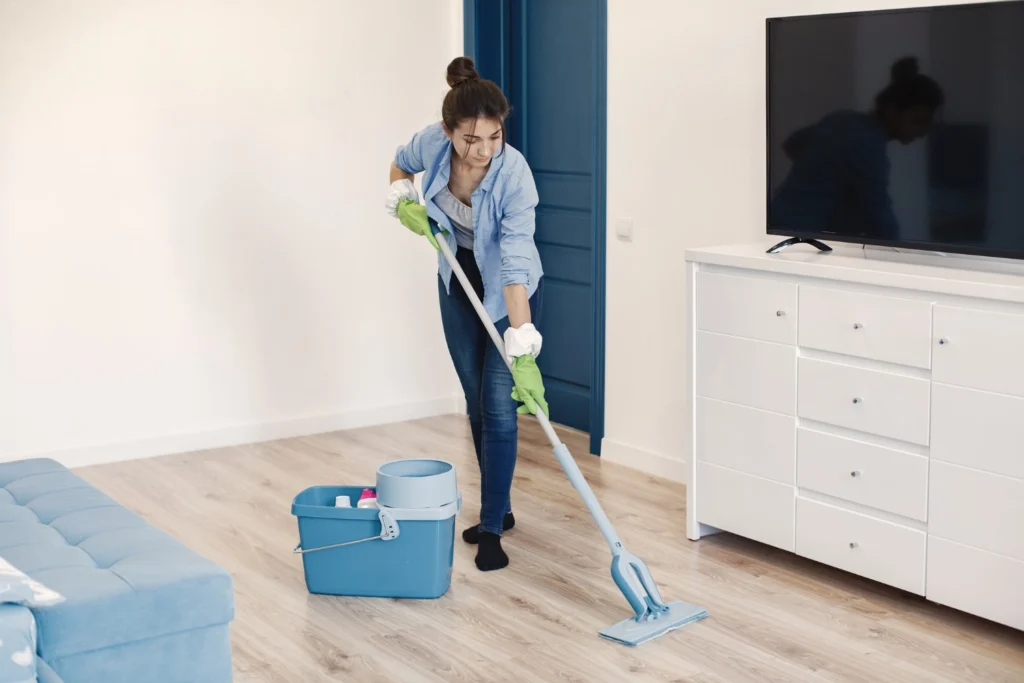
Keeping your home’s humidity under control is the best way to do this. your sticky floor issue will mostly go away if you can maintain indoor humidity between 45 and 55%.
If you have severe humidity problems, the greatest investment you can make is a dehumidifier. you’ll see a change in a matter of hours if you use it in the rooms with the most sticky flooring. as less moisture will collect on your flooring since the dehumidifier really extracts moisture from the air.
Although airflow is very important, you must be careful when you air out. opening windows in the middle of a humid day or during times of heavy rain only allows extra moisture to enter. You should open windows instead, especially if there is a breeze, during the short dry spells in between rainstorms.
Both the early morning before the sun rises and the late evening when the temperature drops can be beneficial. the idea is to allow fresher, drier air to flow through your home without allowing humidity to enter.
Best way to clean sticky floors
Cleaning sticky floors during rainy season requires a different approach than regular floor cleaning. In fact, methods that are effective in dry weather could cause monsoon stickiness.
You can start by using dry cleaning techniques. to get rid of dust and surface oil, sweep or vacuum your floor every day. this may sound simple, but dirty particles produce a sticky, slippery film when they absorb moisture. Removing dirt from flooring reduces the amount of surface area that humidity may interact with. you can use a broom with smooth bristles that won’t harm your floor or a vacuum with a hard floor mode.
You can use as little water as possible when you do need to mop. you can wipe your mop well after soaking it in your cleaning solution. it should not be moist, but just slightly damp. to absorb any moisture, mop a small area at a time and then quickly follow up with a microfiber towel or a fully dry mop. this two-step method cleans floors without leaving behind moisture that would cause them to get sticky.
The correct cleaning solution has a significant impact. you can add a tiny bit of dish soap or a pH-neutral floor cleanser to warm water. because too much soap leaves behind residue that is sticky in humid conditions, you may avoid applying too much product.
For the majority of floor types, a solution of one part white vinegar to ten parts water works effectively and removes sticky substances without leaving a trace behind. however, because the acid can harm marble or stone flooring, vinegar should never be used on them.
How to protect wooden floors during monsoon?
Well, wood is so open to moisture, wooden flooring require extra attention during the rainy season. however, the work is essential since early prevention avoids later, expensive repairs or refinishing.
Placement is the first step in prevention. at every point of entry into your house, place thick, absorbent mats. these mats absorb rainwater before it reaches your wooden floor when people enter with umbrellas and damp shoes.
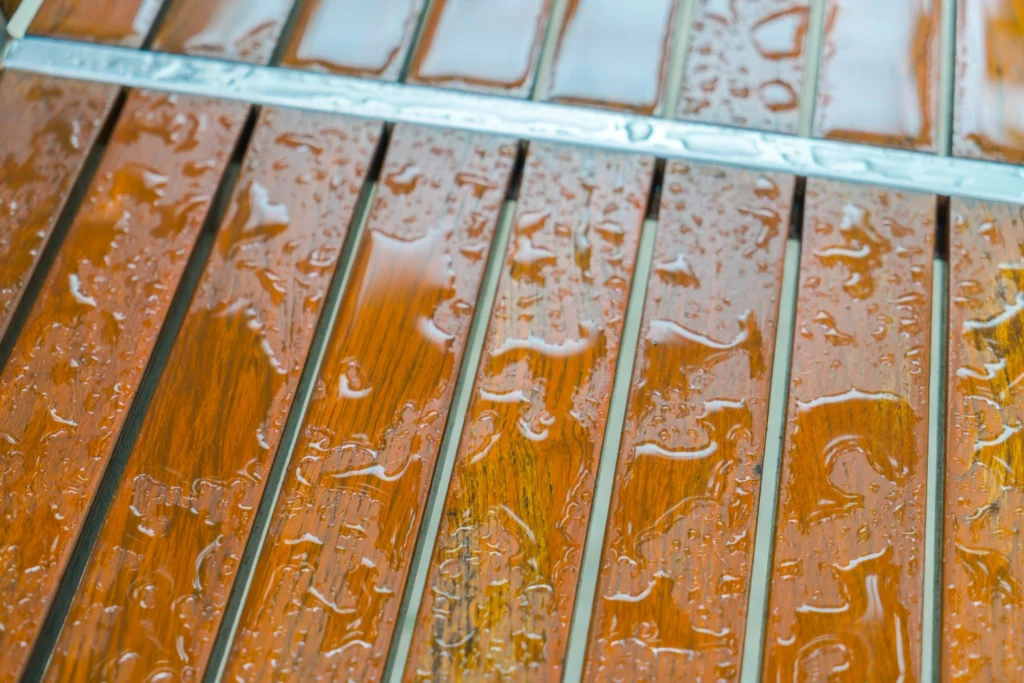
when it rains a lot, check these mats many times a day and replace any that get wet with dry ones. Instead of reducing damage, a wet carpet on wooden floors makes things worse.
Water should never be left on wooden flooring, not even for a short time. If something spills, someone tracks in water, or rain enters through a window, clean it right away. during the rain, keep absorbent towels on hand especially for this use. Water enters deeper into wood with time, causing swelling, cracking, or discolor.
For wooden flooring, humidity balance is even more important than for other kinds. the room with hardwood floors should be the only one where you use a dehumidifier. you can keep a steady 40 – 60% humidity level. because the wood is stressed by the expansion and contraction of each swing, large humidity changes are actually worse for wood than regularly high humidity.
DIY solutions for sticky floors
To keep up with sticky flooring during the rains, you don’t need costly goods or expert assistance. A few low-cost, straightforward solutions do very well.
During the rainy season, baking soda is your friend. you can put baking soda areas or open boxes in the corners of rooms where the floors are sticky. baking soda works as a little dehumidifier by naturally absorbing moisture from the air.
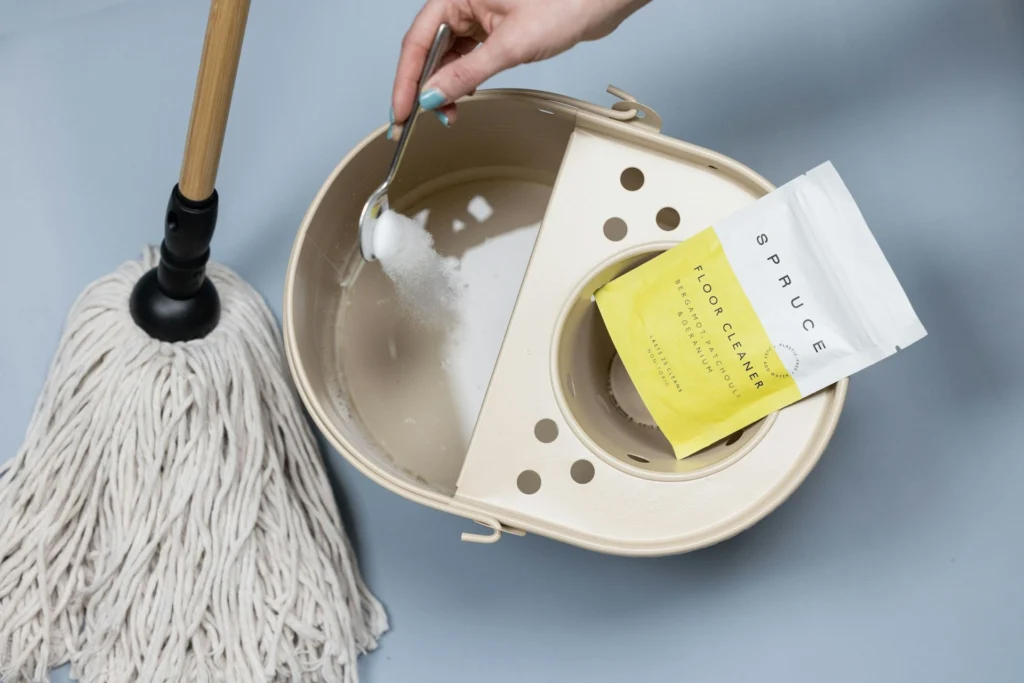
During the best part of the monsoon, replace it once a week. some people create little baking soda sachets out of open fabric and store them in closets or behind furniture. Moisture and smells of mold both get better by this.
Similar but more powerful is how rock salt works. you can really see water collecting in the basin with the salt because it absorbs moisture from the air. In really humid situations, use bigger bowls since they will fill with water surprisingly quickly. You can put them in strategic locations throughout the rooms that have the most issue sticky floors. when the bowls are half full with water, empty the salt and add it again.
That which was of charcoal, such as those used for cooking, also take in moisture. You can put them in air-circulating containers with holes. they must be replaced after a few weeks of use. The ability to dry out and reuse charcoal gives it a line over baking soda. on a dry day, place wet charcoal in the sun and allow it to dry fully so that it may absorb moisture once again.
Long-Term Solutions for Monsoon Floor Problems
Some larger investments can be worthwhile if your flooring are really sticky every rain. Instead of only treating symptoms, these treatments deal with the root problem.
Although installing a whole-house dehumidifier system can look costly, it will greatly improve your quality of life if you live in a region with heavy monsoons and your entire home has sticky floors.
These systems automatically maintain the proper humidity levels throughout your house by working with your HVAC system. while the initial cost is high, many claim that it may change someone’s life, particularly if there are allergies or respiratory disorders in the home that get more serious in humid environments.
Although installing or improving moisture barriers below your flooring is a significant task, it provides a long-term solution to ground moisture issues. the true problem may be ground moisture rising through your floor surface if your home is older and was not constructed with enough moisture barriers.
Installing a vapor barrier necessitates improving your flooring, which may be difficult and costly but is often required. If your floors are sticky all year round but get worse during the rain, or if you’ve tried everything else and nothing has helped, you’ll know if this is your issue.
Why do my floors feel sticky during monsoon even though I just cleaned them?
The soil isn’t the source of the sticky sensation. It’s moisture that has collected on your floors due to high humidity. Humidity levels can rise to 80–90% during the monsoon, and your flooring materials are affected by this moisture. Wood rises and absorbs moisture, giving it a sticky texture. when humid air hits a colder floor, the water that collects forms on the surface of marble and tile. when cleaning chemicals absorb moisture from the air, the residue they leave behind turns sticky.
How often should I mop floors during rainy season?
Mop less, not more, during the monsoon season. Wet mopping causes stickiness by adding extra moisture to already wet floors. To get rid of dirt without using water, replace your normal wet mopping with dry mopping or sweeping. If you must mop, just do it twice a week using a mop that is just slightly wet not wet and wipe the floor with a dry cloth right after.
What is the best cleaning solution for sticky floors in humid weather?
You should use a residue-free, pH-neutral cleanser, or even better, combine ten parts water and one part white vinegar. after removing sticky residue, vinegar evaporates without leaving behind any film. because too much soap makes things more sticky in humid environments, use very little product. however, because vinegar is acidic, it should never be used on marble or natural stone flooring.