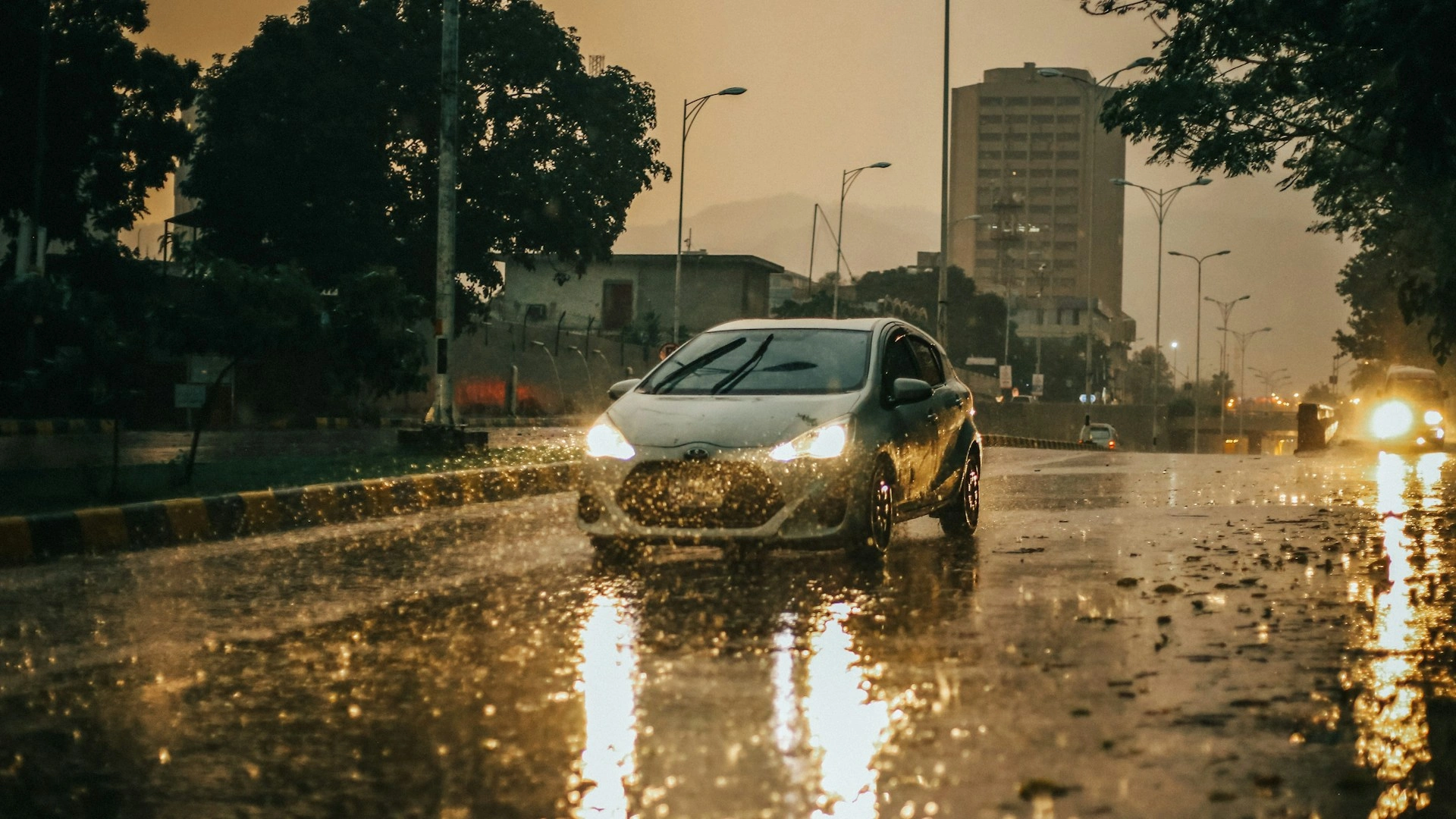
It’s always a nightmare to be stopped on the road with a broken-down vehicle.
But experiencing a car breakdown during a heavy rainy monsoon? that’s a disaster.
No motorist ever wants to be thoroughly wet on the side of a major Indian highway while waiting for a tow vehicle.
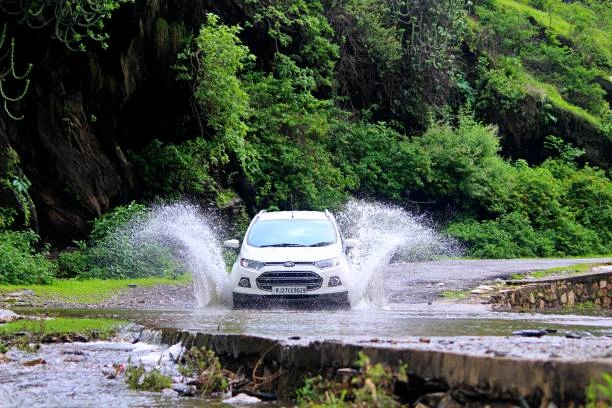
The sad truth is that 90% of monsoon car breakdowns are completely preventable.
You do not need to be a mechanic or spend thousands of rupees at a service center to prepare your vehicle. taking just 10 minutes this weekend to inspect your car can save you from massive repair bills and keep your family safe.
Here are the 5 mandatory car checks you must do today before the heavy rains hit your city.
Check 1: “One-Rupee Coin” Tire Test
Your tires are the only part of your car that actually touches the road. during the monsoon, they become your most important safety feature.
When it rains heavily, water builds up on the road. If your tires are old and bald, they cannot push the water away.
Your car will really float on top of the water rather than stick to the road. This is known as hydroplaning, and it makes your brakes and steering wheel entirely useless.
Your tires require deep grooves, or flat tires, to carry the water away in order to prevent this.
This may be measured without the need of a specialized instrument. all you need is one regular Indian ₹1 coin.
How to do the test:
- Place an upside-down ₹1 coin within your tire’s deep cracks.
- Check the coin carefully.
- Your tires are dangerously bald if the coin’s outer ring is fully visible.
- Your soles are still deep enough for the rain if a significant amount of the coin is taken in by the grooves.
Check all four tires, and do not forget to check the spare tire in your trunk! If your tires fail this simple coin test, you must replace them immediately before driving in the rain.
Check 2: Wiper Blade Squeak
When you are driving through a heavy rain, your windshield wipers are your only eyes on the road.
Most drivers make the mistake of waiting for the first heavy rain to test their wipers. By then, it is too late.
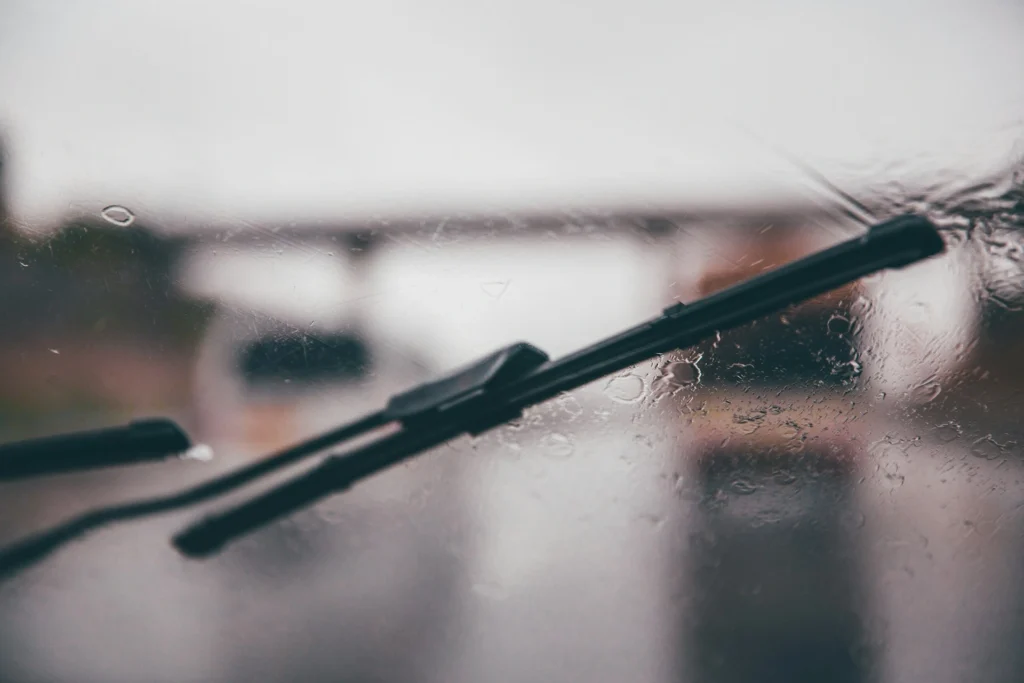
During the hot Indian summer, the rubber on your wiper blades bakes in the sun. It becomes hard, brittle, and cracks. when the rain finally comes, these hard wipers will not clear the water. Instead, they will leave blurry marks across your glass and make a horrible squeaking noise.
The Golden Rule: Wiper blades must be replaced every single year right before the monsoon. they are very cheap (usually under ₹500) and take two minutes to snap on.
Pro Tip: You should never fill your wiper fluid tank with just plain tap water. Tap water leaves hard water stains on the glass. Always mix in a proper windshield washer fluid or a packet of car shampoo. This helps cut through the oily grime that splashes up from wet city roads.
Check 3: Battery Terminals & Wiring
Electricity and water are a bad combination.
The air becomes extremely humid during the monsoon. It is easy for this moisture to get under the hood of your car and damage your battery connections.
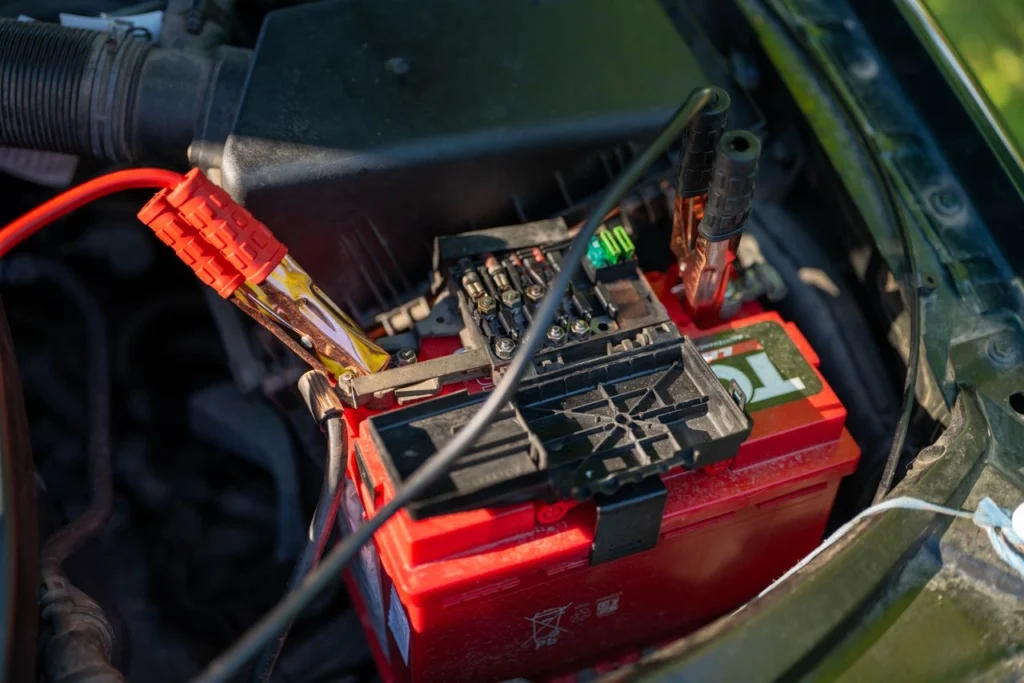
Your automobile may not start on a wet, rainy morning if the battery connections are damaged. Even worse, when exposed wires come into contact with muddy water, they may short circuit.
How to secure your battery in 5 minutes:
- Open your car hood and look at the metal battery posts.
- If you see a crusty white or green powder building up, that is corrosion.
- Clean it off using an old toothbrush and a mixture of baking soda and water.
- Once the metal is clean and completely dry, rub a thick layer of petroleum jelly (Vaseline) over the metal terminals.
This simple hack creates a waterproof seal over the metal. It completely blocks the monsoon moisture and make sure your car starts perfectly every single morning.
Check 4: Brake Pad Bite
Your car can stop up to three times longer on a wet road than it would on a dry one. your brakes become extremely dangerous during the rains if they are already weak.
Your braking strength is suddenly reduced as you drive over pools because the water soaks into your brake pads and the metal discs. your brake pads won’t be able to “bite” through that water layer efficiently if they become worn down.
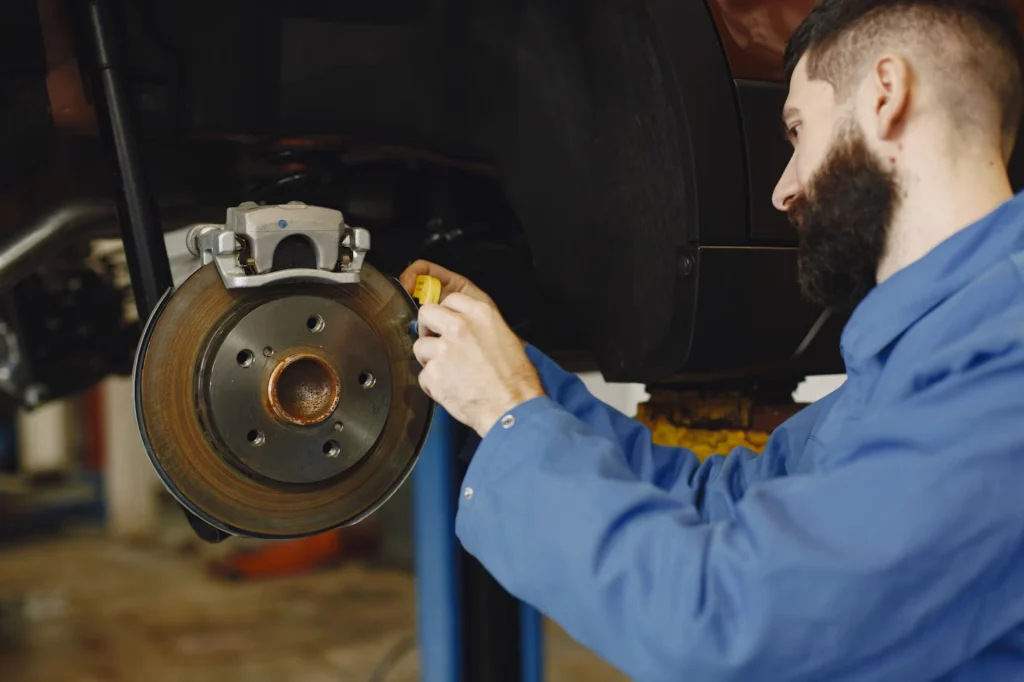
Signs that your brakes require urgent repair:
- When you slow down, you hear a grinding or loud scream sound that is sharp and metallic.
- When you step on the brake pedal, it feels very “spongy” or soft.
- When you stop forcefully, the car pulls slightly to one side.
Before the heavy monsoon start, take your car to a local mechanic to check the pad thickness. If the lining is less than 3 mm thick, get them changed immediately.
Check 5: The “Anti-Fog” Shaving Cream Hack
For any Indian driver, this is a major monsoon headache as soon as it starts to rain, you roll up the windows and start the blower, and two minutes later, your windshield becomes entirely visibly foggy from the inside.
This occurs because the air inside is warm and humid due to your breath, while the air outside is chilly due to the rain. On the chilly glass, the moisture evaporates.
Although you can use your car’s fog lamp setting, you can completely avoid fogging with this clever, free do-it-yourself trick.
The Shaving Foam Trick:
- Take any common white shaving foam or cream from your bathroom.
- A tiny quantity should be poured into a microfiber cloth, which you should then use to thoroughly wipe the inside of your front windshield.
- After two minutes, rub it out with a clean, dry towel until the glass is perfectly clear.
Ingredients in shaving cream form a small, invisible barrier on the glass. No matter how hard it rains outside, your windshield cannot literally fog up since water molecules are unable to stick to this barrier!
Read: How to Drive Safely through Waterlogged Roads
Frequently Asked Questions (FAQs)
Should I lower my tire pressure during the monsoon for better grip?
No, this myth is really harmful! In fact, lowering tire pressure causes the tire’s center to slightly rise, storing water below and raising the possibility of hydroplaning, or sliding over water. Always maintain the exact tire pressure that the manufacturer of your vehicle recommends (typically shown by a label inside the driver’s side door).
Is it safe to put a car cover on my car when it rains?
A car cover should only be used if it is completely breathable and waterproof. A cheap cloth cover will get wet and stick to your car. Your car’s paint will bubble, fade, and eventually rust the metal below due to the stored moisture and heat. It is better to keep your car exposed if it becomes wet so the breeze can naturally dry it.
Is anti-rust underbody coating really necessary in India?
Yes, it is strongly advised. During the monsoon, unclean water, mud, and even waste flood Indian towns’ roads. The exposed metal exhaust pipes and suspension components are gradually corroded when this water splashes beneath your automobile. A rubberized anti-rust coating works as a barrier, keeping water out and preventing costly rust damage.