
Every Indian farmer and gardener is familiar with the emotion. your carefully kept tomatoes turn sideways, your potted plants have fallen over, and your tall crops look to have been through a fight in a matter of minutes as the sky gets darker and the wind suddenly kicks up.

We all look forward to the life-giving rains that come with the monsoon season, but it also brings strong winds that may destroy months’ worth of work in a matter of hours.
Whether you’re in charged with a large field of crops or a tiny kitchen garden on your terrace, you can prevent wind damage to your plants and crops during the monsoon with a little planning and the appropriate methods. many of these solutions are easy, cost-effective, and useful. now let’s get started on how to protect outdoor plants from strong winds during Monsoon or rainy weather.
Why monsoon winds are especially dangerous for plants?
Understanding the true effects of monsoon winds on your plants is helpful before we go on to solutions while stem cracking is definitely a problem, it’s not the only issue.
Physical damage is the most clear problem in this entire picture. strong winds can completely remove young or small-rooted plants, break fine stems, rip leaves, and fall over tall crops like sunflowers and maize. because they behave like sails, gathering wind and pulling their supports down with them, climbing plants and vines are particularly at risk.

This process is a clever process. even in situations where there is a plenty of water in the soil, wind causes drying and leaf burn by removing moisture from leaves much more quickly than usual. plants with big, thin leaves, such as brinjal and peppers, suffer the most damage by this.
Particularly on slopes and dry areas, soil erosion removes the rich soil you’ve created, exposing roots and damaging the developing environment.
Step 1 – Know your wind direction before monsoon hits
Although it looks like easy, most gardeners completely skip this step. Spend a few days watching where the wind truly comes during pre-monsoon and early monsoon conditions in your particular region before you build any breakers or choose where to put your protection.

During the June–September season, monsoon winds primarily come from the southwest throughout much of India. but everything changes by local geography. wind may be concentrated and directed, striking from unexpected directions with twice the intensity, whether your garden or field is situated between two buildings, down a valley, or on a slope. because they increase wind speed, wind tunnels between buildings are very harmful.
For best results, place windbreaks, holes, and covers on the appropriate sides of your plants after you are aware of the direction of your main wind.
Step 2 – Set up windbreaks (your most powerful defence)
The best thing you can do to keep your plants safe during the monsoon is to have a solid windbreak. By decreasing wind speed by up to 50%, a well-positioned windbreak may transform a damaging storm into a peaceful breeze.
One important point to keep in mind is that semi-permeable barriers are actually more effective than solid ones. on the protected side, instability and spinning caused by a solid wall or fence might be more harmful than the wind itself. what you want is a barrier, such as a picket fence or hedge, that slows the wind by filtering it through.
Living Windbreaks (Best Long-Term Solution)
A live windbreak, which is simply a form of cover or row of trees along the windward side, is the most practical and long-term option for home gardeners with space and farmers with field crops. Additionally, it improves soil health by decreasing erosion, offers home for beneficial insects and birds, and actually boosts agricultural yields by 10–30% in the protected region behind it.
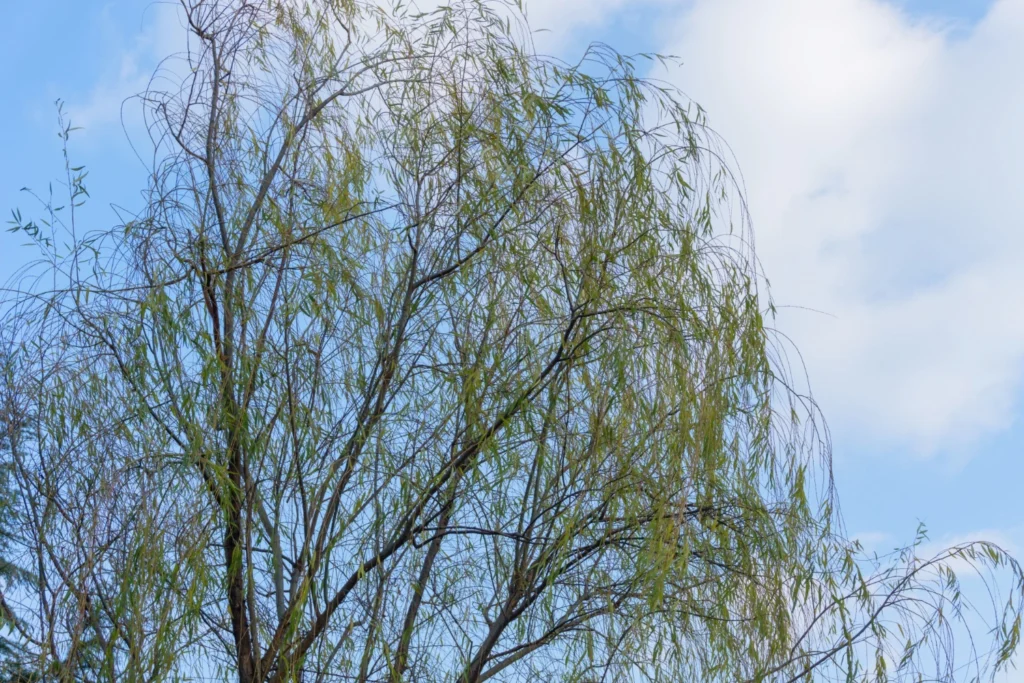
Good windbreak plant choices for Indian conditions include:
- Casuarina (Vilayati Saru) — It is fast-growing, drought-tolerant, excellent windbreak
- Bamboo — It grows rapidly, very strong, provides a dense semi-permeable barrier
- Drumstick tree (Moringa) — It has dual purpose, grows fast, edible
- Banana — It can act as a short-term windbreak around a vegetable patch
- Dense shrubs like Lantana or Duranta — for garden borders
You can place your windbreak trees or shrubs on the windward side, which is where the wind originates, and plant them closely together. the protection they offer is long-lasting, but it will take them a season or two to reach maturity.
Temporary Windbreaks (For Immediate Protection)
If the monsoon is already here and you need protection now, don’t worry there are quick options:
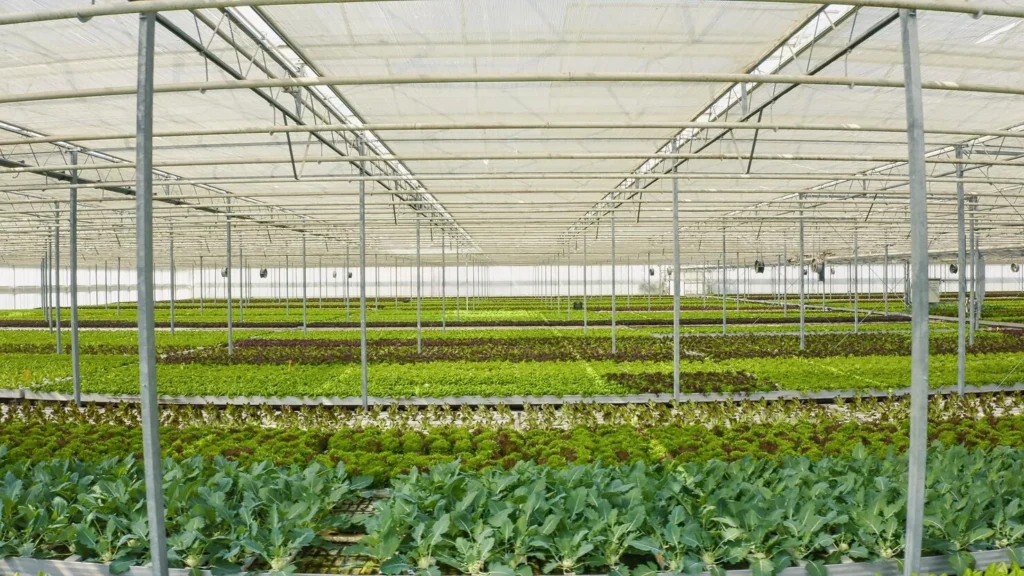
- Shade net fence, also known as agro-net fencing, is cheap, easily accessible, and very efficient. on the direction of the wind of your beds or plot, stretch it between stakes. Wind is wonderfully filtered by the net without causing disturbance. A 50% shade net works best since it blocks enough wind without completely block airflow.
- Burlap screens, also known as jute sacking, are made by tying jute fiber between exposed bamboo poles. this is an ancient method that is still quite effective.
- Straw bale walls: you can use bricks to weigh down two rows of straw bales stacked on the windward side. surprisingly successful in providing field crops with a temporary barrier during the strongest storms.
- Tall companion plants: In a vegetable garden, tall plants such as sunflowers, maize, and arhar (pigeon pea) can provide cover for weaker, shorter plants. To create a live windbreak in the garden, plant them on the windward edge.
Step 3 – Stake and Support your Plants
Giving individual plants the support they require to bend with the wind rather than snap in it is the next line of defense after installing your windbreak.

The main idea here is that staked plants should have some flexibility since it will eventually strengthen the plant’s root and stem. the plant shouldn’t swing so much that it breaks at the base or rips its roots out of the earth.
Which plants require staking?
Before the monsoon, almost all of these should be staked:
- Tomatoes, brinjal, capsicum, chilli
- Maize and sorghum
- Sunflowers and tall flowering plants
- Banana plants (especially young ones)
- Climbing beans, bitter gourd, bottle gourd as these need secure tying to their supports
- Newly planted trees and saplings of any species
- Dahlias, gladiolus, and other tall flowering plants
How to stake properly?
To avoid damaging roots, drive a wooden pole or strong bamboo stake at least 30 to 45 cm deep into the earth close to the plant, outside the main root ball. Next, attach the plant to the stake in a loose figure-eight pattern using coconut coir rope, soft garden twine, or pieces of old fabric. The figure-eight provides support without cutting or wrapping the stem, enabling it to bend organically.
You should verify safety of all ties along the ladder or support structure for climbing plants such as beans, ridge gourd, and bitter gourd. In fact, if you expect really strong winds, you might want to tie climbing vines from their trellis, carefully lay them flat on the ground until the storm passes, and then re-tying them when it is done.
The Teepee/Tripod Stake method for tall crops
A single stake may be insecure for really tall plants, such as sunflowers or tomatoes. Instead, drive three bamboo poles in a triangle around the plant and quickly them together at the top. This tripod arrangement is significantly more effective than a single stake in dealing with wind pressure from several angles. Additionally, it’s the ideal framework for gardening crops and climbing beans.
Step 4 – Move and Protect Container Plants
Your pots and containers are quite exposed to monsoon winds if you plant on a deck or balcony. It is easy to blow over a huge container plant, breaking both the plant and the pot.

Here’s what to do:
- You should move pots to a shaded space, below an overhang, or in a protected corner against a wall. Pots can help one another and limit their individual exposure when they are grouped together.
- During storm warnings, tall, top-heavy pots and hanging baskets should be lowered to the ground. Hanging baskets can be moved below the roof overhang or indoors.
- For smaller pots that you are unable to move, weigh down lightweight containers. To provide weight and avoid tipping, use bricks or large stones on top of the soil’s surface.
- Turn a bigger pot, basket, or even bucket over the top of small to medium-sized pots to cover individual plants, then use a rock to hold it down. To avoid heat gathering, remove the covers as soon as the storm has passed.
Step 5 – Use Row Covers, Nets, and Protective Fabrics
Row coverings and nets offer a layer of physical protection against wind for nursery seedlings, young transplants, and delicate vegetable crops while still enabling the plants to get some rain, sunshine, and airflow.
Vegetable rows can be well protected by an agro-shade net (50% density) wrapped over hoops or a basic bamboo frame. there are many farmers often use this for nursery beds during the monsoon since it greatly reduces wind force.
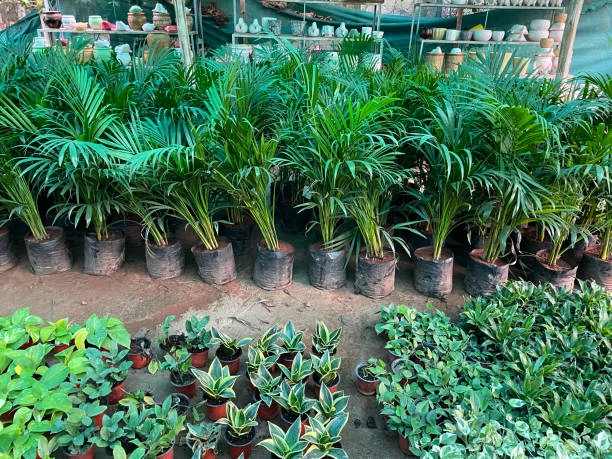
For single large plants or young trees, jute cloth or sack covering works well. using a bamboo pole for extra support, carefully wrap the lush plants and bind it with soft cotton thread. after the storm has passed, remove the covering. Jute breathes well, but extended wrapping might lead to fungal problems caused by moisture.
During a really strong storm, a plant frame can be temporarily covered with plastic sheeting, but don’t keep it on for longer than a few hours since it quickly retains heat and moisture. Plastic coverings should always be taken off as soon as the storm has passed.
One crucial piece of advice is to carefully anchor whatever cover or net you choose. before a storm arrives, inspect each anchor point, use bricks on the edges, and secure nets to the ground with stakes. your plants may suffer more harm from a loose net flying in a strong wind than from having no net at all since it turns into a whip.
Step 6: Cut with care due to the Monsoon Season
One of the most underappreciated preventative methods is pre-monsoon trimming, which works for both agricultural orchards and trees in private gardens.
Reducing the “sail area” of your shrubs and trees is the aim. Large, dense canopies absorb massive quantities of wind power and act as a lever to break branches or uproot the entire tree. A well-pruned tree is far less stressed because it allows the wind to flow through it.
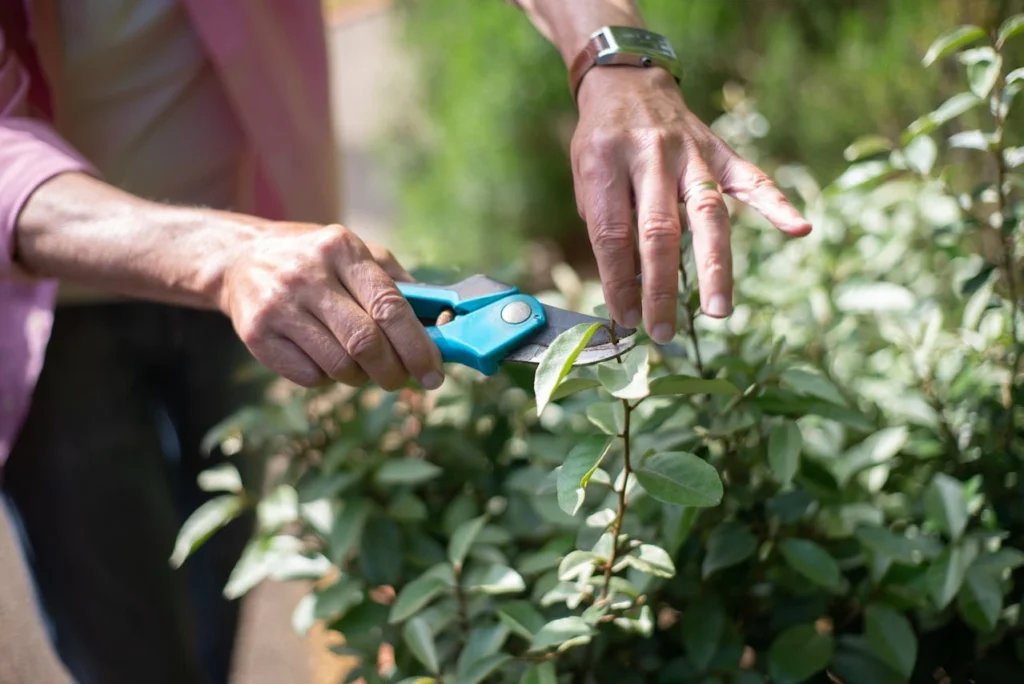
Here’s what to focus on:
- The first branches to break and turn into hazardous flying rockets are dead, diseased, or crossed branches.
- On mango, guava, and other fruit trees, thin down thick canopies to significantly reduce wind resistance without damaging the tree.
- Cut off any long, heavy branches that grow far from the stem. These are particularly prone to breaking and work as levers. these overhanging branches are the largest monsoon vulnerability for desert plants like paloverde trees and cactus.
- Cut back decorative plants that have stopped blooming and excessively tall herbaceous plants as there’s no reason to risk damage when they’ve completely fulfilled their purpose.
Step 7: Cover plant bases with sand
This one serves two purposes by providing simultaneous protection from monsoon wind and rain damage.
Coating the base of your plants and crops with a 5–8 cm layer of organic mulch (dry leaves, paddy straw, coconut husks, wood chips) achieves many goals at once:
- It protects the soil and keeps roots from being damaged by wind erosion.
- It holds onto moisture to keep plants hydrated even as the wind dries them off.
- It stops the spread of soil-borne fungal infections caused by strong monsoon rainfall splashing onto the soil.
- It reduces competition during the stressful monsoon season by keeping weeds at home.
One of the most economical preventive expenses farmers can make is mulching crop rows with dried grass or paddy straw before the rain arrives. A bag of coco peat or dried leaves from the garden are ideal for home gardening.
Mulch should be placed a few inches apart from the main stem or trunk. Piling cover up against stems can trap moisture and lead to root rot.
Frequently Asked Questions (FAQs)
When should I start preparing my plants for monsoon winds?
Ideally, two to three weeks prior to the arrival of the monsoon in your area, which is late May or early June in the majority of India. this window allows you enough time to set up windbreaks, correctly stake plants, trim before the monsoon, fix fences, and prepare your nets and coverings. It is difficult and far less productive to rush through all of this the night before a storm. monsoon preparation is similar to test revision in that it makes all the difference to start early.
Is a solid wall or concrete fence good enough as a windbreak?
In actuality, it is less helpful than you may imagine and occasionally causes the situation. on the protected side, solid barriers push wind up and over the top, causing roughness and circular air currents that can harm plants just as much as open wind. what works far better is a semi-permeable windbreak a hedge, shade net fence, or slatted barrier that filters and slows the wind rather than stopping it dead. you should aim for something that is 50-70 % solid with spaces to let filtered air pass through.
What is the correct way to stake a plant so it doesn’t snap during monsoon?
Staking for flexibility rather than strength is important. Just outside the root ball, drive a strong bamboo or wooden stake at least 30 to 45 cm into the ground. then, use a regular coconut coir rope or soft twine to hold the stem to the post in a loose figure-eight pattern. while the stake prevents the plant from bending so far that it breaks, the figure-eight allows the plant to naturally flex with the wind, which actually increases the stem. more harm can be done to a plant by tying too tightly, flat against the stem, than by the wind.