Last night, while I was enjoying a nice cup of tea on the couch in my living room, I realized that the bad smell of the rainy season was still present throughout the home. I could smell that old, smelly fragrance every time I passed past the window curtains or laid back against the cushions.


The thick curtains and couch fabric had obviously absorbed moisture, dust, and common kitchen odors after months of high humidity in Ahmedabad. The last thing I wanted to do before preparing the house for Navratri visitors was to remove heavy drapes or try to clean a three-seater couch.
So, I tried a much simpler approach. Instead of spending thousands on professional cleaning, i focused how to remove damp musty smell from heavy curtains and sofa covers.
Why your living room fabrics trap that stale smell
Heavy curtains and the thick stuffing of sofas can retain moisture for a surprisingly long period. If the air remains humid for weeks then small quantities of moisture can get into the fabric, the cushion foam and the folds of the curtains.
We also tend to leave the windows closed for longer when it is raining heavily with less fresh air passing through the room, moisture, dust, body oils and cooking smells can gradually accumulate in the fabric.
Which is why merely spraying an air freshener usually doesn’t cure the problem which it might mask the smell for a short time, but the original smell will still be present in the fabric.
My simple method to refresh heavy fabrics without washing
You don’t have to deep clean heavy curtains or wash large sofa cushions every time. first, just dust them off. then, focus on getting them dry and removing any smells.

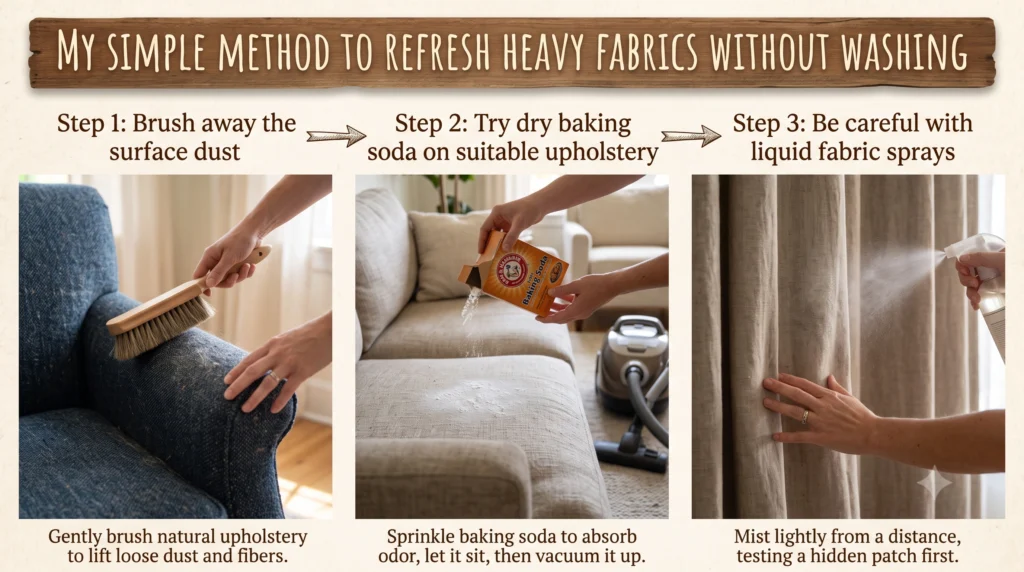
Step 1: Brush away the surface dust
Start with a clean, soft-to-medium bristle brush or a vacuum. you should clean your curtain folds, armrests, and sofa cushions gently.
The spaces between the seat and back cushions need particular care. there is a lot of airflow, and this airflow.
The rest of the deodorizing procedure works significantly better if the surface dust is removed first.
Step 2: Try dry baking soda on suitable upholstery
You can use baking soda to get rid of bad smells on some fabrics.
Just put a thin layer of baking soda on dry sofa cushions and let it sit for a couple of hours. you don’t need to put on a lot. after that, vacuum it up really well.
Before you do the whole sofa, look at what the manufacturer says about cleaning it and try it on a small, hidden spot first. some materials shouldn’t be treated with powders or cleaners you use at home.
Step 3: Be careful with liquid fabric sprays
You might want to mix vinegar and water to spray your curtains while they’re hanging. but this doesn’t work for all fabrics.
If your curtain fabric can be washed and the care tag says it’s okay, try spraying a tiny, hidden spot with a weak vinegar and water mix first. don’t soak it and just a light spray is fine.
Read: How to remove damp bad smell from a closed wooden shoe rack
After that, open your windows and use a ceiling fan to help the curtains dry fast.
For delicate materials like silk, velvet, or special upholstery fabrics, it’s better to avoid homemade sprays. Instead, follow the cleaning advice from the manufacturer.
Letting the crisp october sunshine do the heavy lifting
When the rain stops and the October sun comes out, use the dry weather to your advantage.
Open your windows when it’s driest outside and let fresh air circulate through your living room. spread out your curtains so air can get into the folds, rather than letting them stay bunched up by the window.
If you can, take your sofa cushions outside to a place with good ventilation so they can dry out completely. just be careful not to leave any delicate fabrics in bright direct sunlight for too long, as it can cause colors to fade.
Doing this a few afternoons in a row can really help, especially if the musty smell is mostly from wet.
Easy habits to keep your living room smelling fresh
Developing a few easy weekly routines prevents your thick clothing from getting damaged by indoor humidity once more.

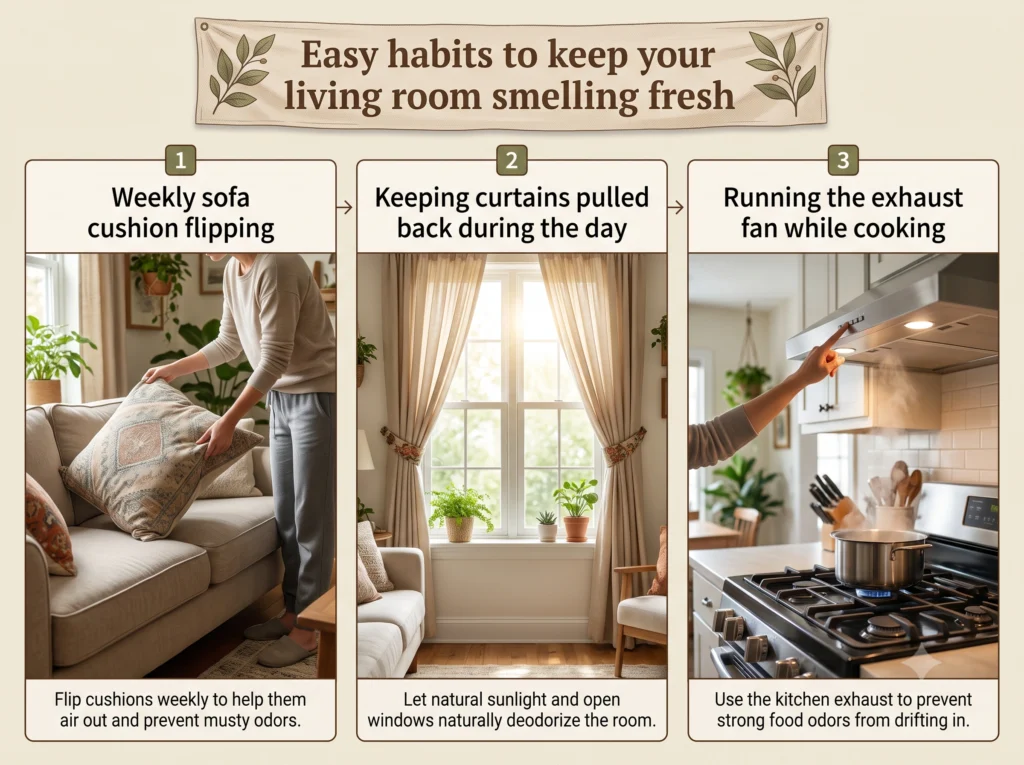
- Weekly sofa cushion flipping: To release stored body heat and moisture from the bottom foam, turn and stand your seat cushions on their sides for an hour under the fan.
- Keeping curtains pulled back during the day: To allow fresh air to pass through the pleats, heavy coverings should be tied loosely to the sides rather than bunched up against moist window corners.
- Running the exhaust fan while cooking: when making tadka, turn on your kitchen chimney or exhaust fan to prevent oily steam from flying into the living room and sticking to moist upholstery.
Frequently Asked Questions (FAQs)
Will white vinegar stain my light-colored sofa covers?
No, cotton and polyester textiles won’t get yellow stains from plain distilled white vinegar because it is entirely transparent. If you have weak silk or velvet coverings, you should still test a small amount of spray on the sofa’s back skirt to be absolutely safe.
Can i use a clothes iron on hanging curtains to remove the smell?
No, applying a flat hot iron to damp, dusty curtains actually causes the trapped dirt to be baked further into the threads, leaving synthetic curtains with shiny burn marks. If you already know how to get rid of the wet, sour smell from thick bath towels during the monsoon, you are aware that vinegar and moving room air are far more effective than dry heat.
What if the musty smell is actually coming from the wooden sofa frame?
Yes, occasionally the smell is caused by moisture from the floor being absorbed by the wooden base under the cushions. the same mild vinegar procedure i gave in my guide on how to get rid of a wet, foul smell from a closed wooden shoe rack may be used to totally remove smell from the exposed wood.