After taking a shower, you feel clean and refreshed. you grab your towel. Then it comes on you that musty, wet, slightly sour smell that seems to soak into every towel in the house as soon as it starts to rain. It is one of the most annoying things about the rainy season is that you wind up feeling less clean than when you first started.
Does that sound familiar? you are by no means alone. It is one of the most regular household issues for both renters and homeowners during the rainy season is musty towels. fortunately, this issue is also one of the most easily resolved. you don’t need difficult routines or costly items.

We’ll go over everything in this guide, including why towels become musty during the rainy season, how to keep towels fresh during rainy season, how to correctly wash and dry them, how to store them, and what you can do to keep things fresh for a long time. Your towels will smell like towels once more by the end of this.
Why do towels smell musty during rainy season?
Let’s take an overview look at what’s really going on before we start fixing it. Because the answers make perfect sense once you know the source.
Bacteria is the quick answer. Tiny microbes find themselves in a fiber of a towel and begin to grow when it remains wet for a long period of time. when you pick up a towel that hasn’t dried completely, those germs are what cause the terrible foul or sour smell.
For several reasons, this issue becomes much more serious during the rainy season.
Drying is slowed down by high humidity. a covered towel might dry in an hour or two in dry conditions. that the same towel may still be wet six or eight hours later at the height of the rain. bacteria have more time grow the longer it is wet.
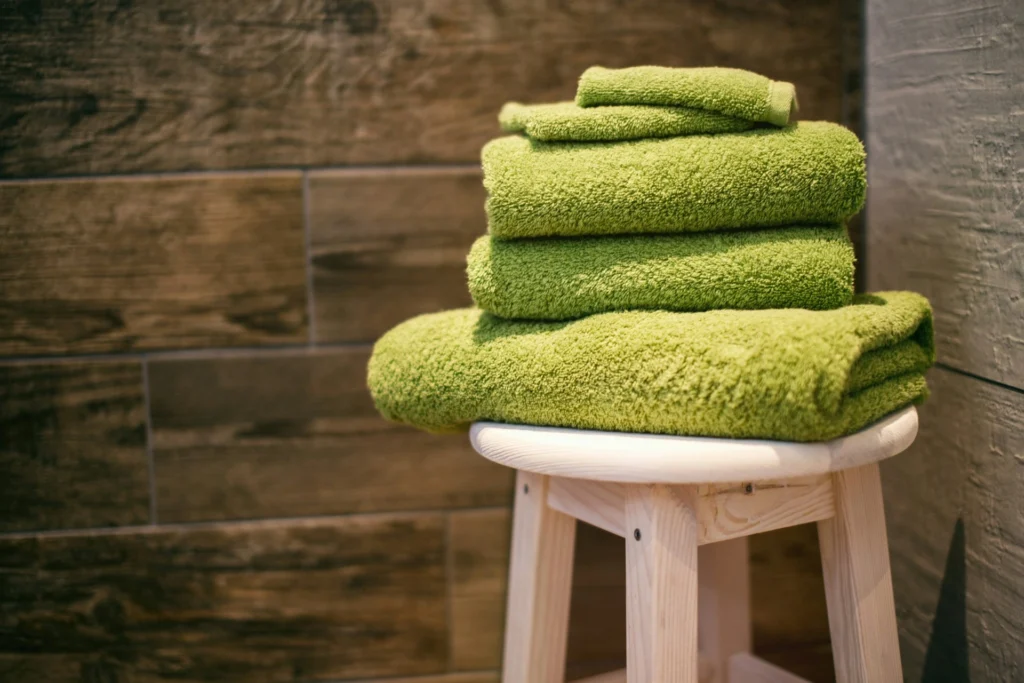
Bathrooms with little ventilation increase the situation. any home’s bathroom is already the most humid space. the moisture just has nowhere to go when monsoon air is added. even a towel laid out on a rack takes a very long time to dry without breeze.
A natural sanitizer is removed by less sunshine. it is one of nature’s most potent antibacterial agents is sunlight. the days of sunshine that would often aid in drying and cleaning your clothes are gone during the rainy season. the natural refreshing effect of towels is lost when they are dried inside.
Additionally, storage overcrowding causes issues. we frequently use the same towels before washing since everything takes longer to dry. before they have completely dried, items are packed into cabinets or piled up wet in the bathroom. both of these situations are ideal for the growth of germs and mildew.
Step 1: Hang your towels properly after every single use
This is the most significant behavioral modification you can make, and it is completely free. Whether your towel dries correctly between usage or just sits there collecting bacteria depends greatly on how you hang it after each use.
What most people do incorrectly is fold the towel in half over a hook or rail, or worse, drape it in a thick layer over a door. As a result, there is no ventilation between the layers and a significant amount of the cloth gets folded on top of itself. even in typical conditions, the inside layers might remain wet for hours.

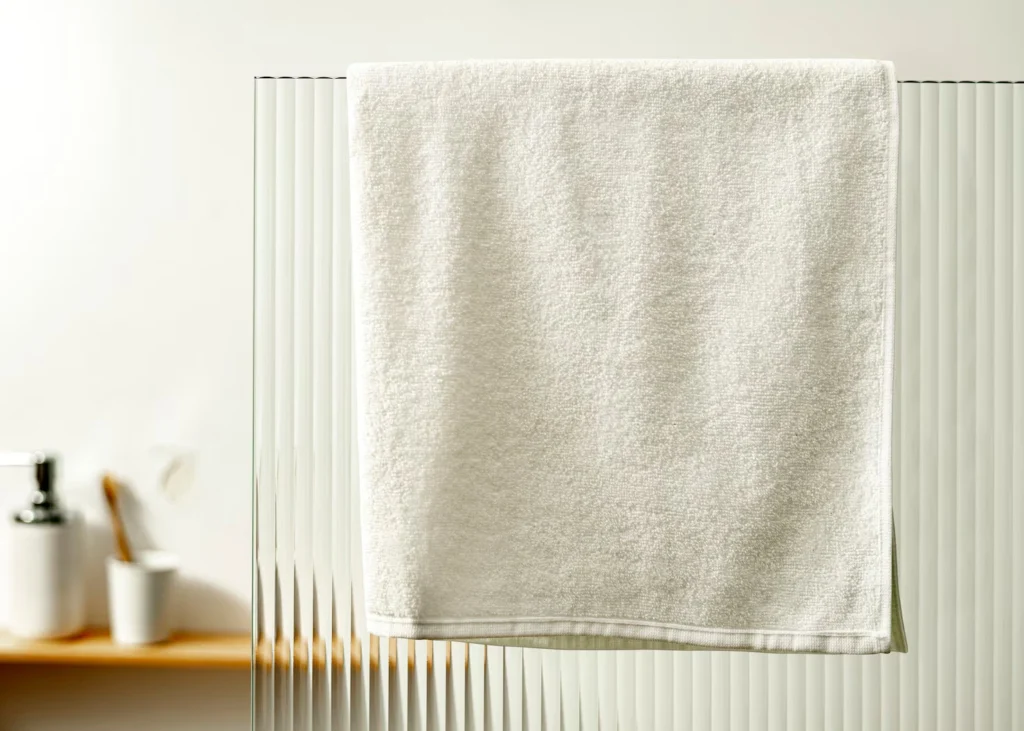
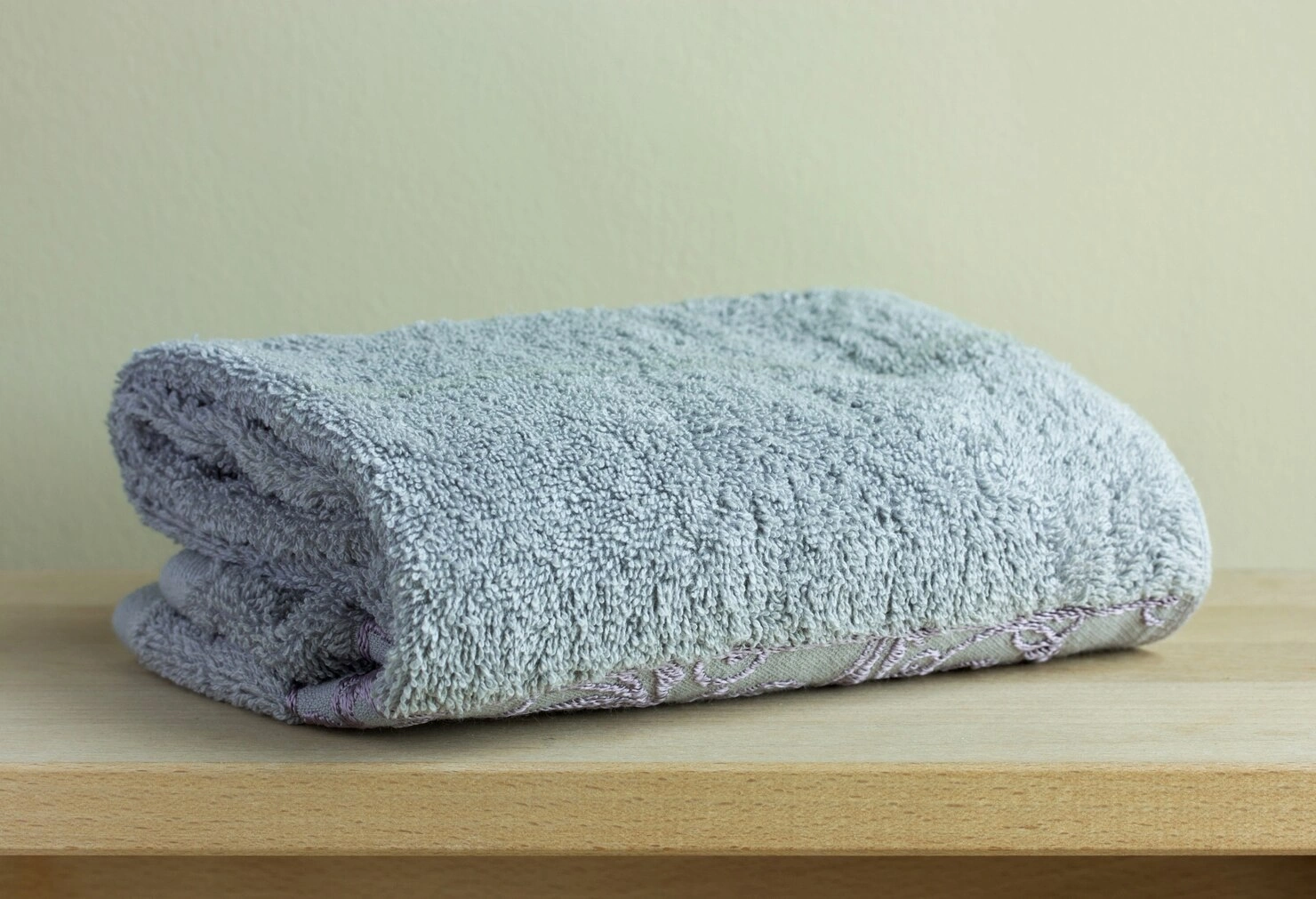
Here’s what you need to do instead. Ideally lowered to its maximum width, spread the towel as wide as you can over a towel rail or bar. the cloth should be exposed to air on both sides. If you are using a hook rather than a track, make sure the towel hangs in a single layer without bunching and at least shake it out completely.
You should avoid stacking many towels on top of one another. put away the towels or get an extra towel bar if many towels fight for the same rack in a shared bathroom. Towels require their own area.
Towels should ideally be hung in a bedroom or corridor just outside the bathroom. particularly before and after showering, the air in the hallway is typically much drier than the air in the bathroom. Your towel’s drying time can be significantly reduced by taking it out of the bathroom right away after usage.
Before hanging the towel, give it a thorough shake. Instead of sitting flat and thick, shaking helps the fibers dry more quickly by arranging them out.
Step 2: Ventilate your bathroom after every shower
Every time you take a shower, your bathroom makes a lot of moisture, and all of that steam needs to go somewhere. that steam tends to remain trapped within until you specifically force it out during the rainy season, when the outside air is already heavy with humidity.
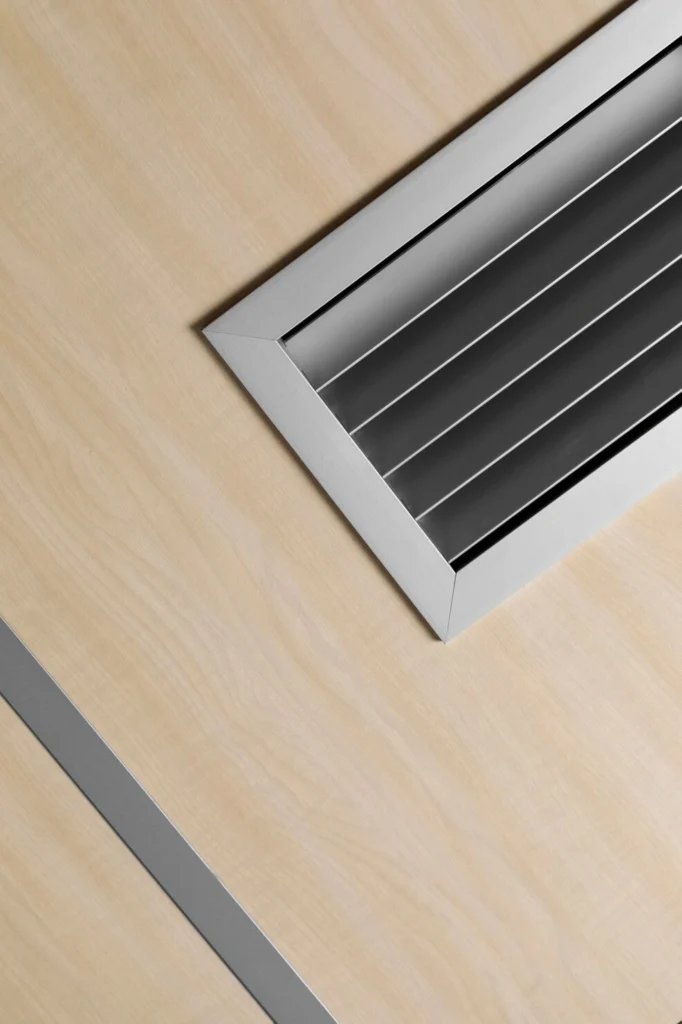
Before taking a shower, turn on your exhaust fan, and once you’re done, leave it running for at least half an hour. open the bathroom window as much as you can comfortably if you don’t have an exhaust fan. The speed at which moisture evaporates is greatly affected by even a little gap.

You can apply covered window film while keeping the window open for airflow if privacy is an issue. This is a basic peel-and-stick product that can be found at many hardware stores.
After taking a shower, leaving the bathroom door open is also quite beneficial. Moisture is carried away by the drier air that enters from the rest of your house. this is an easy and totally free approach to greatly increase bathroom ventilation if your home’s architecture allow it.
The most important environmental tweak you can make to keep towels fresh throughout the rainy season is to have a well-ventilated bathroom. this foundation serves as the basis for everything else.
Step 3: Wash towels more frequently during rainy season
Washing your bath towels after three to four usage is usually OK in dry weather. You must shorten that cycle during the wet season. because germs grow more quickly in moist fibers in high humidity, a towel that smelled great after four usage in the summer may start to smell after just two uses during the height of the monsoon.
Try to wash your bath towels no more than every two or three uses throughout the rainy season. Kitchen and hand towels should be cleaned every day or two because they are used much more frequently and by a lot of people.
Towels should never be placed in the washing basket while they are still wet. This is one of the quickest ways to develop a significant mold issue. Instead of throwing wet towels in the hamper, hang them out to air out if you have used them but are not quite ready to wash them. In a matter of hours, a moist towel in a warm, dark laundry basket can start to smell like damp.
Step 4: Wash towels the right way
Although washing towels looks straightforward, there are a few key factors that can significantly impact how fresh they turn out, particularly during the rainy season.
Make sure you use the proper amount of detergent. cleaner towels are not a result of using more detergent. overuse of detergent produces a residue in the fibers that, over time, actually retains moisture and smells, increasing rather than improving the musty issue. you should use roughly half as much detergent as you would for a load of ordinary laundry of a comparable size.

Do not use the fabric softener at all. the waxy, oily coating that fabric softener creates on towel fibers decreases absorption and, more importantly during the rainy season, retains moisture in the fabric. musty-smelling towels are directly caused by this covering. White vinegar softens fibers naturally without leaving any deposit, so consider using it in the rinse cycle if you want softer towels without the chemical residue.
Towels should be washed apart from other laundry. compared to most clothing, towels require longer wash and dry cycles since they are heavy and absorbent. you may use the proper water temperature and cycle time for towels especially if you wash them separately.
Step 5: Use the Vinegar and Baking Soda method to rescue towels that already smell
This is the real solution if your towels already smell musty or sour and ordinary washing isn’t getting rid of it. White vinegar and baking soda, which are readily available in most homes, are all that are needed.
The crucial point is that, while both vinegar and baking soda are useful, they cancel each other out when used in the same cycle. Utilize them in two different cycles.

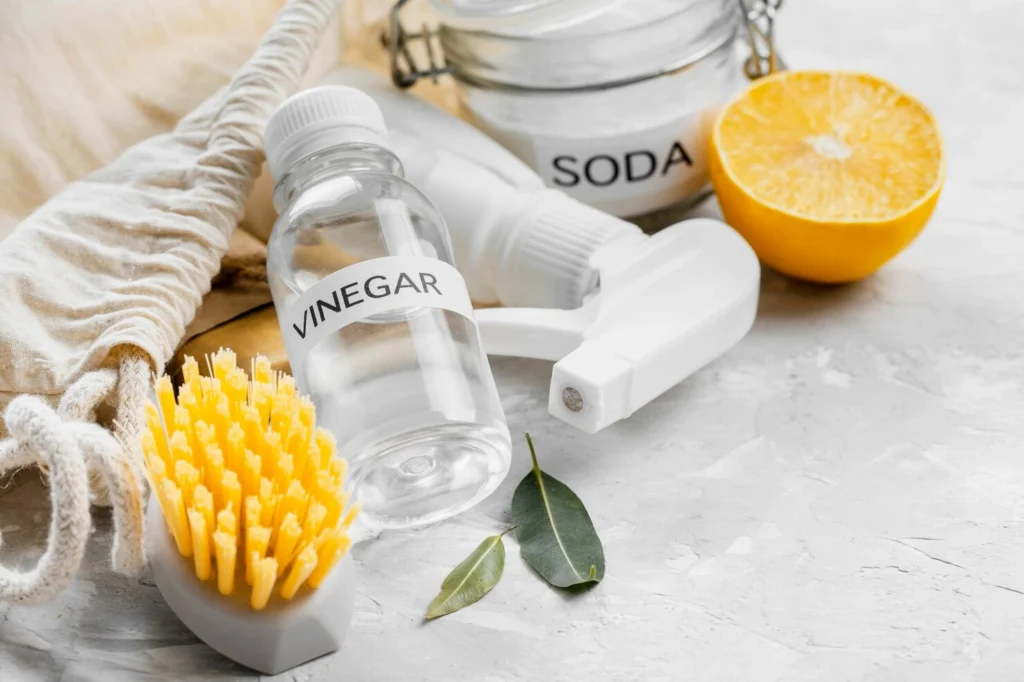
Cycle 1: Put your towels in the washing machine without using any detergent. Fill the fabric softener compartment or the drum with one cup of white vinegar. Use warm to hot water for the entire cycle. Because vinegar is naturally acidic, it removes the mold and germs that cause smell. Additionally, it removes detergent waste that forms in the fibers over time.
Cycle 2: Wash the towels again without letting them dry. Instead of using detergent, fill the drum with half a cup of baking soda this time. Because baking soda is alkaline, it kills any leftover smells from the first cycle, even any little vinegar odor. It serves as a natural fabric softener as well.
Make sure the towels are thoroughly dry after both cycles. Blow dry on low to medium heat if you have a dryer. Select the area with the best airflow if you are air drying.
For towels with a really persistent smells, you might need to repeat this method once or twice. However, the repeated cycle approach usually restores the towel to its original state.
Step 6: Dry towels completely before folding or storing
Many people subconsciously destroy their hard work in this area. If a freshly washed towel is folded and kept while still somewhat wet, it can quickly take on a musty smell.
Before folding and storing towels, check to make sure they are totally dry. you should put your hand through the thickest area of the cloth, which is typically the bottom fold or the hem. It need more drying time if it feels even a little heavy or chilly to the touch.
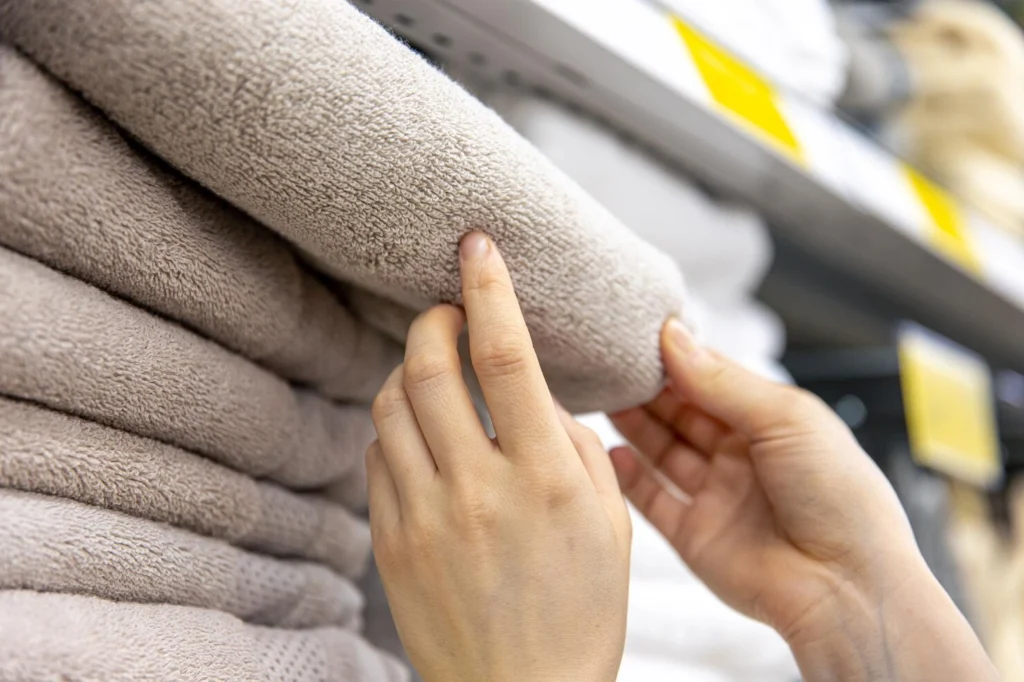
Steam dry on low to medium heat if you have a dryer. When the cycle is over, remove the towels right away. do not leave them in the dryer since the contained area and residual heat might cause moisture to reappear. when you bring them out, give them an in-depth shake to loosen up the fibers.
Try these techniques if you are air drying. In order to maximize airflow, place the drying rack close to a window or doorway. when compared to still air, even a slight wind greatly speeds up the drying process. even indoors, moving air dries towels far more quickly than still air, so run a ceiling fan or table fan next to the drying rack.
Step 7: Store towels the right way
Nearly as important as how you wash and dry your towels is how you keep them. Storing towels incorrectly can cause them to develop a musty smell even when they were perfectly fresh going in.
You should keep only towels that are totally dry. If you are doubtful if a towel is completely dry, never put it away. Moisture will grow in the surrounding fabric from even a little damp towel, giving other towels a foul smell.
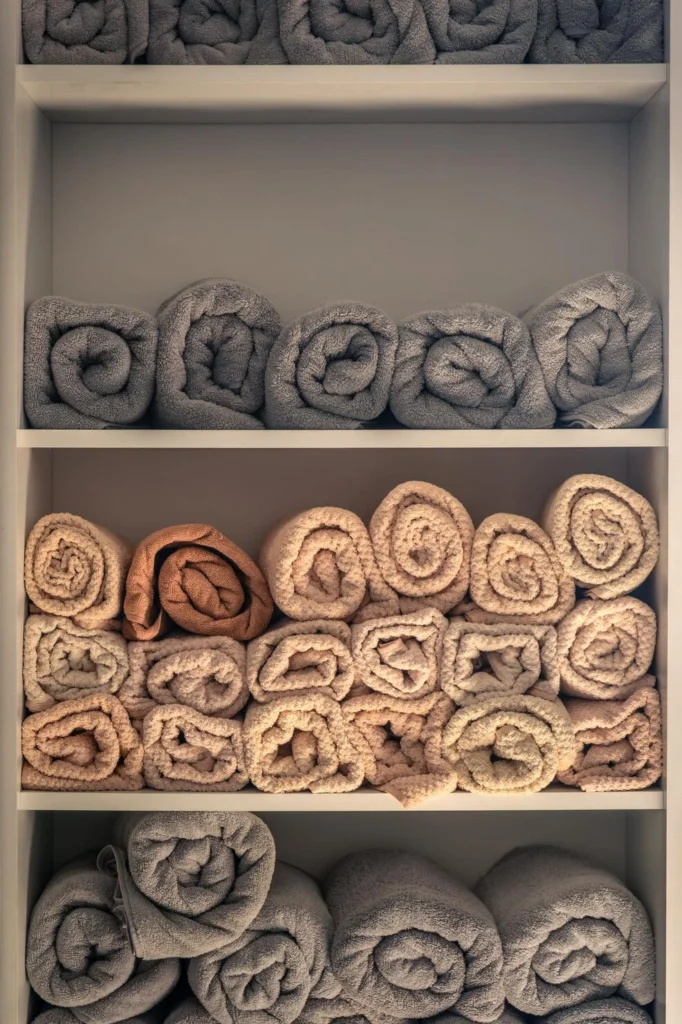
You should avoid packing your storage too full. there is no airflow between towels arranged closely together. fold fewer towels per stack and leave room between each pile if your linen cupboard or shelf is tiny.
Keep in a dry, cool place. Since bathrooms are the most humid areas in the house, try to avoid keeping towels there. A linen cupboard in the hall or on a bedroom shelf is nearly always a better and drier place.
When possible, use open bookshelves. Air can move about towels that are kept on open shelves in an area with good ventilation. Poor ventilation may make closed cabinets hot and damp, which gives stored cloth a musty cupboard odor.
Step 8: Choose quick-drying towels for rainy season
The rainy season is a wonderful time to consider fabric selection if you’re looking to buy new towels.
Although they are incredibly soft and absorbent, standard thick cotton towels take a long time to dry. A thick cotton towel that takes 6 to 8 hours to dry during a high-humidity rainy season is spending a lot of time in an area where germs might do well.

Even in humid environments, microfibre towels frequently dry in one to two hours, which is significantly faster than cotton. they are lightweight and impervious to the mildew issues that bulky cotton towels are sensitive to in the rain.
Bamboo towels are more able to stand to microorganisms that cause odors because of their natural antibacterial qualities. they dry more quickly than thick cotton and are softer than microfibre.
A decent solution is waffle-weave cotton towels, which have the familiar feel of cotton fabric but are lighter and dry more quickly than typical turbo cotton.
You should look for anything labeled “quick-dry” or “antibacterial” while purchasing new towels especially for the rainy season.
Step 9: Keep your washing machine clean
Each lot of laundry you run through your washing machine, including your towels, will smell bad if it is housing germs and mildew.
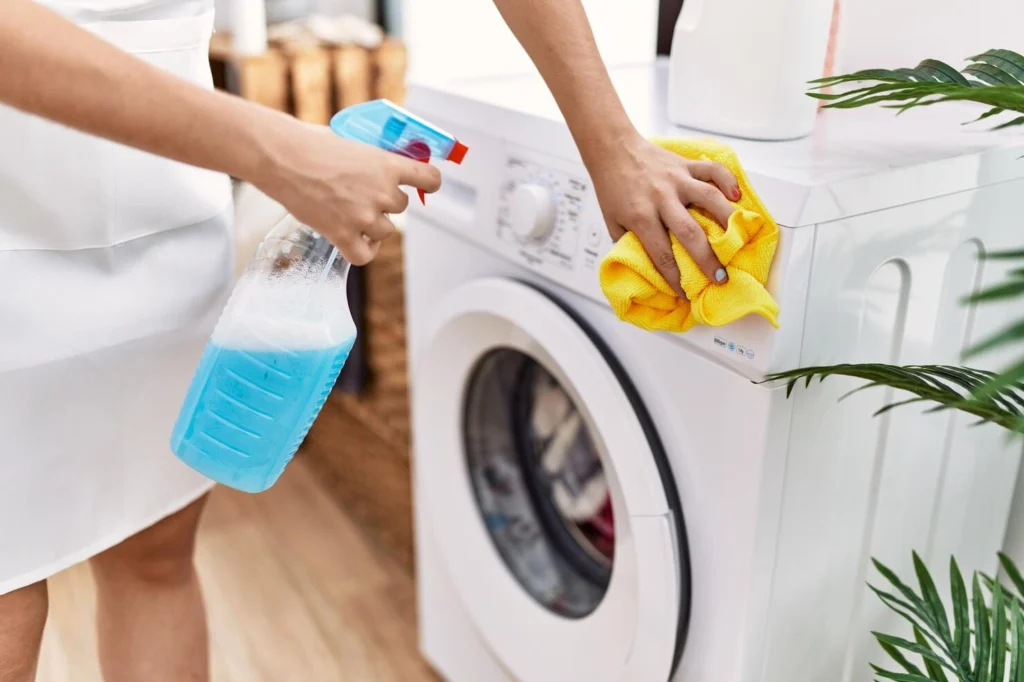
You should run an empty hot water cycle with two cups of white vinegar in the drum every three to four weeks. After the cycle, use a towel wet in a vinegar-water solution to clean the rubber door seal, which is where mildew usually grows first.
To allow air to flow within the drum, keep the washing machine door open after each wash. The mildew that finally finds its way onto your clothes grows in a closed drum because it remains wet. clean laundry is produced by a clean machine. It really is that easy.
Quick Reference: What to do and What to avoid
| Do | Avoid |
|---|---|
| Hang towels fully spread out after every use | Leave damp towels folded over hooks in thick layers |
| Wash towels every two to three uses during rainy season | Put damp towels into the laundry hamper |
| Use half the normal amount of detergent | Use fabric softener on towels |
| Add white vinegar to the rinse cycle regularly | Store towels in the bathroom if it has poor ventilation |
FAQs
Why do my towels smell musty even right after washing during the rainy season?
You might be surprised to learn how common this is, and it typically boils down to one of three factors. First, it’s possible that your towels aren’t completely dry before you fold and store them. In humid environments, even a small amount of residual moisture might cause bacterial development to resume. Second, with time, detergent or fabric softener residue can buildup in your fibers, collecting moisture and odors.
How often should I wash towels during the rainy season?
Compared to dry weather, wash less often during the rainy season. Instead of washing bath towels after three to four usage, they should be washed every two to three. It is recommended to wash hand towels every one to two days. during the monsoon, it is good to wash kitchen towels every day.
Is it safe to use white vinegar on all types of towels?
The great majority of towel materials, such as cotton, microfibre, and bamboo, are safe to use with white vinegar. regular use won’t harm fibers or strip color because it is low enough. one piece of advice is to always read the care label before handling delicate or specialized materials.